Posts

Trust me, I’m a researcher

Image
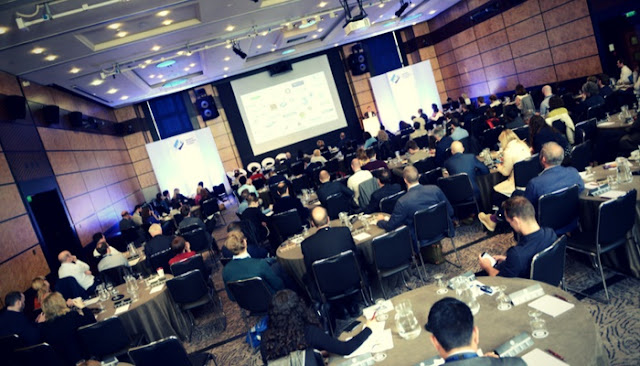
What media research has in common with the healthcare industry Last week, the Media Research Group ( MRG ) held their excellent annual conference at the Royal College of Physicians in London under the theme “Body of evidence” (see what the organisers did there?) It was my privilege to participate in the conference as part of a soapbox session where several speakers debated the topic “truthfulness and trust in research”. After the conference, several people asked me for a copy of my talk, but since my notes aren’t very self-explanatory, I thought I’d expand on the theme here as a blog post. My context was the many parallels that exist between the worlds of healthcare and media. For starters, both industries handle massive amounts of data, often from diverse sources, and try to make sense out of it. Consider the following examples: Single customer view In media, this is the holy grail – being able to track an individual across multiple platforms and gather rich data to he...

"You're right, I'm wrong"

Image
… said no one ever on social media I live in Lewes, East Sussex, the unofficial bonfire capital of the UK, nay the world. This weekend, the population will increase fourfold as tens of thousands of people descend on the town to take part in a custom that has its roots dating back to the mid 1500’s when 17 protestants (the Lewes Martyrs ) were burnt at the stake. On Saturday night, six Lewes-based bonfire societies will parade through the streets , along with societies from outlying villages, carrying burning torches, before returning to their bonfire sites where they burn effigies and launch spectacular firework displays. The event is steeped in tradition and ritual. It is anarchic, pagan and anti-establishment – anyone concerned with health & safety protocols would be well advised to stay away. This year, the fireworks have been going off early though. There has been a debate rumbling for a while amongst the townsfolk that has exploded into the mainstream media as part of “Zulu...

"Keep your eye on the ball"

Image
What business has in common with cricket. This summer, I started playing cricket again after a hiatus of many years. It was a very enjoyable experience and, although not especially elegant to watch or prolific from a pure numbers point of view, it did reinforce several lessons from my junior playing days, that felt every bit as relevant today as they were back then. “Keep your eye on the ball”. Pretty obvious advice for any batsman really, but also easy to overlook amidst the myriad distractions of diverse bowling actions, erratic line and length, unpredictable bounce, ever-changing field placings, scoreboard pressure, quick singles, fluctuating weather conditions and so on. In such circumstances, it is very easy for the novice batsman (i.e. me) to make the wrong decision. To try to smash the ball they should be defending or leave the ball they should be hitting. To predetermine what they are going to do as the bowler runs in rather than making a considered decision based ...

Wake up and smell the roses

Image
What time out of the corporate world has taught me Amidst the flotsam and jetsam that flows through my LinkedIn feed on a daily basis, there are occasional posts that really grab my attention, for reasons good or bad. One such post satisfied that criteria earlier this week, but unfortunately it was for all the wrong reasons. The article referred to a software CEO who described a key question he asks in interviews - “Would you leave your family behind on holiday if work required you to do so for ‘important business’?”. Any potential candidate saying “No”, would not be offered the job. What a great way of assessing their total commitment to the company before they even start, eh? He even boasted about how he abandoned his own family at Disneyland during one holiday so he could go off and close a deal. I guess he was at least practicing what he preached. To me, this post raises important issues for us all to consider – what is more important, family or job? Who do we want to be in contr...

Celebrities, Influencers and the art of selling

Image
Why authenticity is ultimately better than borrowed interest There were times last week when I felt a bit like a little boy standing outside a sweet shop, nose pressed against the glass, admiring all the delights on display within. The reason for this was the Cannes Lions Advertising Festival – that time of the year when advertising’s leading lights gather on the French Riviera to talk about the state of the industry and hand out lots of awards. I wasn’t among them. In fact, whilst many friends and colleagues have been there regularly in the past as presenters, judges or regular attendees, I’ve personally never been. I’d quite like to go one year, for curiosity as much as anything, but for now I remain one of those standing on the outside looking in. However, fortunately my social media feed at this time of year is always full of pictures and observations from sundry venues, restaurants and yachts, allowing me to still experience the event vicariously. Of all the adver...

Building a brand without research

Image
8 things I learned from a chocolate magnate I always enjoy hearing from entrepreneurs who have built successful businesses, especially when they tell stories that I knew little about beforehand. I heard one such story last week at Insight Intelligence’s Market Research Summit and it got me thinking about the role of market research in a company’s success. The speaker was Jo Fairley , co-founder of Green & Blacks, the premium chocolate company she launched with her husband, Craig Sams, himself founder of the Whole Earth organic food company. For those that don’t know it, Green & Black's is a British premium chocolate company, founded in 1991 on an ethical platform of sustainability and championing the virtues of high cocoa content, dark chocolate. True to its ethos, it became the first chocolate brand to be awarded a free trade mark and has been declared one of the UK’s coolest food brands for 10 years in a row, as voted by Coolbrands. Green & Blacks sold to Cadbury’...

When the customer loses her voice

Image
Why companies need to listen more to avoid humiliating back-downs. So, McDonald's have become the latest company to withdraw a new ad campaign following a backlash from the general public. In case you haven’t seen it, the McDonald's ad uses the theme of childhood bereavement in a clumsy attempt to promote their Filet-o-Fish product. The ad was misjudged at best, cynical at worst and gives the impression of having been created in a corporate vacuum where no-one during its gestation had the nous to say “Are we sure this is a good idea?”. Advertising like this does not just turn up fully-formed and ready to air. A lot of people will have been involved in its development over many weeks at McDonald's, at their ad agency and at the film production company. Approval processes must have been followed along the way. And unless McDonald's – a family restaurant let’s not forget – had some wider agenda, then it seems bizarre that no-one could have seen the ba...

Not another conference?

Image
Why I’ve changed my approach to get more out of conference season. Been to any good conferences lately? On May 25th, I’m off to one in London. It’s called the Market Research Summit . It has an impressive range of speakers and promises some thought-provoking sessions - I’m really looking forward to it. In recent years, I’ve spent lots of time at all sorts of industry conferences, sometimes presenting, but more often just sitting in the audience. I’m sure many readers of this post will be the same. But for every conference I’ve been to, there have been many more that I could have attended if I had the time, inclination and budget – like many industries, mine certainly loves a good conference. A few conferences I’ve attended have been consistently outstanding, but most tend to offer a handful of highlights at best, with the rest being rather forgettable. Previously I’ve tended, rather simplistically, to associate a forgettable conference experience with a low-quality confe...

The power of insight-led advertising

Image
...or why I think the new Qantas Australia campaign got it right. Having spent much of my formative working life in advertising agencies, I have always remained a strong advocate of (good) advertising. I have a perhaps unhealthy interest in discovering new campaigns from around the world and absorbing them as both a consumer and a communications professional. I have seen first-hand examples of the impact that a powerful, advertising campaign can have on people, brands and even society. Great campaigns are rare, but when you come across one, it stands tall like a lighthouse, towering above an ocean of mediocrity. But whilst such exceptional work may come in all shapes and sizes, if you dig beneath the surface you’ll find that it typically contains two things in common: Firstly, it has taken a creative risk to ensure that the work will stand out from the competition and get talked about - great campaigns don’t follow category convention, they subvert it. Secondly, it i...

Seeing how the other half lives

Image
..or why we should all leave our ivory towers once in a while. Last week I found myself in Sunderland with time to kill. As you do. I decided to resist the usual temptation to linger in my hotel room staring at a screen, dealing with emails, reading articles, or generally wasting time on social media. Instead, I decided to leave all technology behind and get to know my temporary location a little better. I’d never been to Sunderland before and have to confess that I knew very little about it before this trip. I did know that it had a long history of shipbuilding, is the location for a Nissan car manufacturing plant and is also home to a struggling Premier League football team. I also knew that it is typically the first electorate in the country to declare its results in general elections and as such is considered something of a Bellwether town. In last year’s EU referendum, it voted 61% in favour of Brexit and was thus a portent of the result that was to follow natio...

The freedom of tight briefs

Image
... and why I find a blank sheet of paper is often my most effective tool. I spent most of my formative working years in advertising agencies, employed in a range of client management and strategy roles. Aside from being great fun, it also meant I got to work with some extraordinarily gifted creative folk, helping to develop some memorable and highly effective campaigns. A key part of my role was writing creative briefs, the key document that captures the essence of a campaign task and acts as the kindling to help ignite the creative fires. Writing briefs for such a talented, yet demanding group of people was challenging and required me to hone various skills that have proven to be invaluable to this day, long after I left adland behind. But there are three particular skills that I consider to be the most important of all - clarity, simplicity and brevity: Clarity – You have to be really clear about your message. What are you trying to get across? If you can’t crystalli...

Now you see it, now you don’t?

Image
Snapchat may have built an audience, but will the money follow? As most of you will no doubt know, Snap Inc. (the parent company of Snapchat) made its debut on the New York Stock Exchange last week, closing its first day of trading up 44% at a price of $24.48 per share which valued the company at a staggering market cap of more than $28 Billion. Despite some subsequent market corrections, this is still an amazing outcome for a company that has consistently been losing money . In 2016, for example Snap made a net loss of $514 million, with revenue growing at a lower rate than the direct cost of achieving that revenue. Figures at the end of 2016 also showed Snapchat has built an audience of 158 million daily active users, still growing, but at a slower rate than previously, raising questions as to whether its future growth will become far harder to achieve. Early investors are therefore taking a calculated gamble on Snap Inc’s future potential to turn a profit, based on thei...

Assume I know nothing

Image
The qualitative research technique that should be more widely used In a previous life, I used to facilitate qualitative research projects: focus groups, depth interviews, accompanied shops, ethnography…. that sort of thing. In fact, I worked out recently that over a 10-year period, I personally ran well over 1,000 separate sessions - that’s a lot of people to get to know and masses of topics to get my head around. Everything from Annuities to Zoos (yes, really) But despite the diversity of these projects, they had one thing in common – the people I was talking to were all recruited as ‘experts’ in that particular topic. Regardless of whether I was talking to a CEO or a main grocery buyer, a tradesman or a media planner, the reason they were there was because they all knew more about their subject than I did and my job was to learn from them. Sure, on some occasions I may have begun the project with a good understanding of the topic myself, but that was not important. ...

The trouble with insight

Image
Why the term is in danger of becoming meaningless. This week, many of the industry’s finest minds are gathering in the beautiful city of Amsterdam for the annual Insight Innovation eXchange Europe conference ( IIeX ). I was fortunate enough to attend IIeX Europe two years ago, and was inspired by the clarity of thinking, quality of presentations, creativity of solutions, level of collaboration and, yes, the insight on display. I came back buzzing with ideas for new ways to think about developing insight and how the output might become better embedded within an organisation. Since then, I have spent time with other insight-focused organisations and conferences including Insight Management Academy , Insight Intelligence and the Insight Show . These interactions have further reinforced my belief in the power of insight. It also got me thinking about what true insight is and how it can make a real difference - given my job title was ‘Head of Insight’, I figured I should ha...

Artificial intelligence or real experiences?

Image
Why the actual is fighting back against the virtual. Over the last few weeks, I have read, heard and watched lots of predictions for the year ahead – the media and communications industry loves a prediction at this time of year. These predictions typically morph into a few meta-themes and for 2017, most were centred around the ever-tighter grip that technology will exert over our lives, both professionally and personally. Artificial intelligence, machine learning, virtual reality, chatbots …. unbelievable and exciting advances in technology helping us to automate just about everything. But whilst most predictions foreshadowed ‘traditional’ media coming under increasing pressure from the overlords of automation, I did detect something else. A mention here, an aside there, maybe even the odd demi-prediction. A recognition that the more our lives are dictated by technology, the more important it will be to ensure a human counter-balance. Focusing on ‘real’ rather than ‘reali...

More haste, less speed

Image
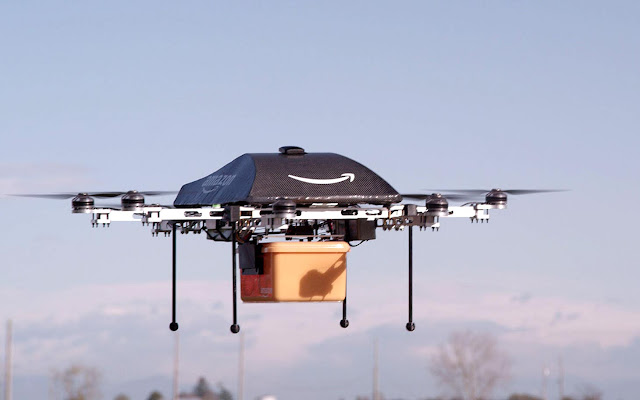
Why brands should be cautious about the promise of drone deliveries. Late last year Amazon showed off their latest innovation in drone technology, with an entire click-to-delivery transaction being completed in a mere 13 minutes. You may have seen the video – a retired gentleman in Cambridge deciding he just must have an Amazon Fire TV stick and a bag of popcorn ….and he didn’t want to wait. His click sent a fulfilment team into a frenzy at the nearby Amazon distribution centre and before we knew it, the customer was ambling out into his massive back garden to retrieve his package from the drone which had affected a perfect touch down on his conveniently located landing pad. Minutes later, he was happily chomping away on the popcorn whilst trying to work out how to operate his new piece of technology. Aha, you may say. All very well if you live on a country estate, near to an Amazon distribution centre, but what about those of us who live in urban areas? Fear not, Ama...